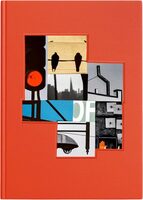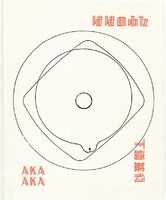
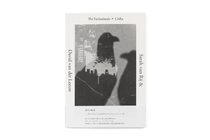
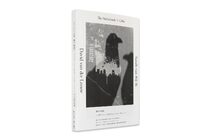
The Netherlands × Chiba Taking Photographs, Telling Stories
Sarah van Rij、David van der Leeuw、Yuki Shimizu
En estoc
Editorial
Categoria
Informació
- Softcover, double-sided jacket
- 224 pages
- 182 x 257 mm
- ISBN 9784865412161
- Japanese, English
- Nov 2025
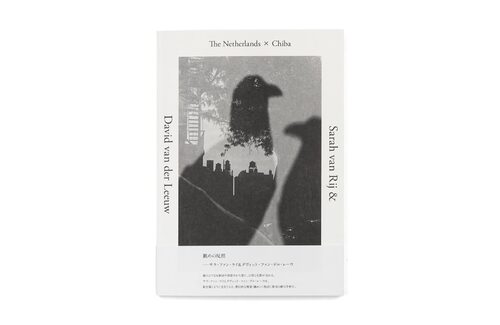
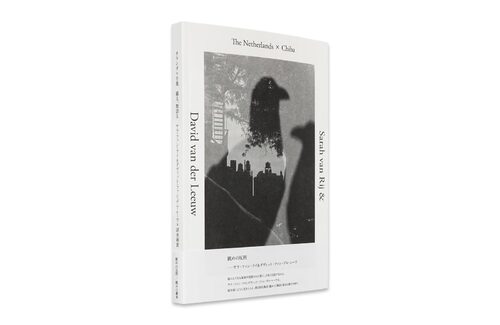
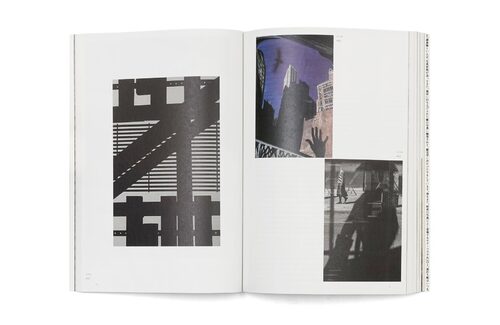
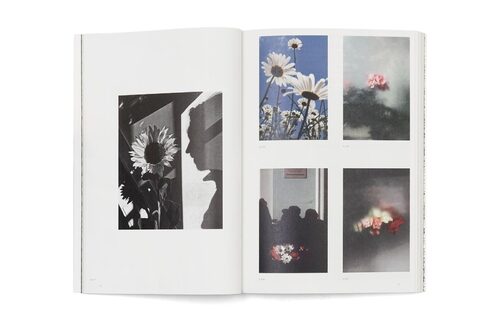
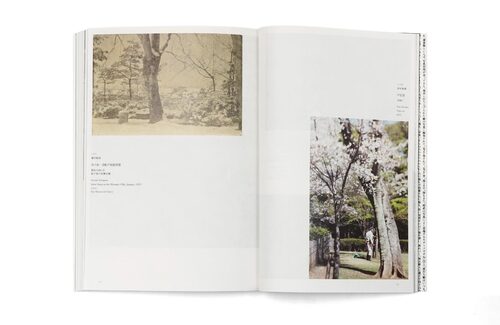
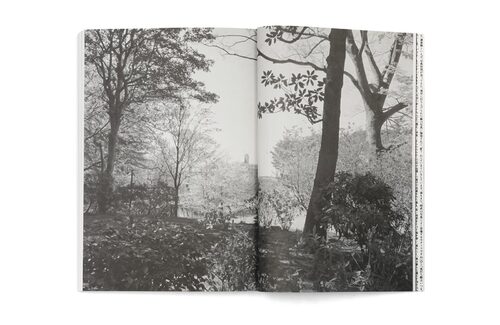
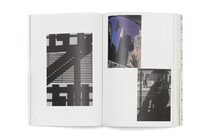
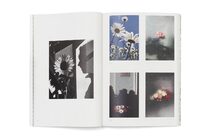

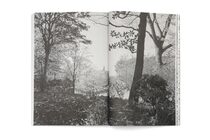
The work of Dutch photographers Sarah van Rij and David van der Leeuw has recently garnered a lot of attention, through their unique photographic expression that utilizes reflections and shadows effectively to project dreamlike landscapes with vague outlines. They walk around urban centers like flâneurs and, in their words, seek "to capture the unstaged and almost undefinable elements of the city." These elements are "the vague silhouettes of people, or the vast amounts of colors, abstract shapes, and poetic rhythms the city itself consists of," which consequently evoke "the essence of a city."
The subjects that van Rij and van der Leeuw discover "incidentally" are given new lives as entirely different images through their outstanding sense of color and framing. After spending their teenage years at the beginning of the 2000s, they developed the incredible sensitivity needed to construct images from their daily life which is overflowing with pictures: they truly are children of the digital era.
The fragments of city memories and historical traces evoked in their work are often deeply entwined with cinematic elements, especially in the influence they profess from American filmmaker John Cassavetes. In the series Metropolitan Melancholia (2019-2022), which they worked on in New York during the Covid pandemic, something like a story may arise from the depth of an abstract image, as though it were a scene from a movie. This "narrative" inclination establishes the impression that the numerous films set in the city provided a subconscious influence.
Their attempts to construct new images of streets developed further in Still Life, a project that began under lockdown during the pandemic, which was shot indoors, in a controlled environment. Here, too, reflections on panes of glass or shadows on the wall establish multi-layered images.
The self-portraits in these still lifes leans on a rich lineage of art that goes back to the old Dutch school. In paintings, figures reflected on items were a mark of the fine application of techniques of depiction by skilled artists, yet the feeling of attraction to what you can see and the desire to express every visible thing equally can be said to have been inherited to this day. The traces of the artists themselves in the work compel us to be drawn into their art world.
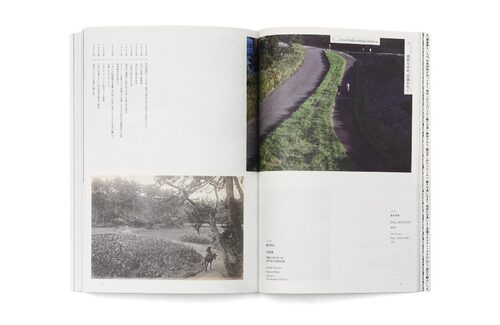
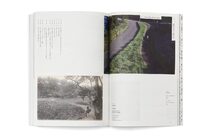
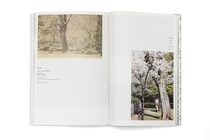
Moving back and forth between two modes of expression -photography and novels - Yuki Shimizu works with a unique production style in which she carefully researches the history and traditions of a place and, while unveiling its past, builds a fictional world in photographs and words. This story originated from an old photographic archive collection that remains in the house of the Tojo-tei in Matsudo, a designated important national cultural property that was built about 140 years ago.
The Tojo-tei is the location where Akitake Tokugawa (1852-1910), brother of the last Shogun of the Edo period, Yoshinobu Tokugawa (1837-1913) and 11th head of the Mito domain, spent half of his lifetime after retiring in 1884 at the age of 29. Basing himself there, Akitake enjoyed various activities such as hunting, photography, and cycling. He especially devoted himself to photography, setting up a dark room in the house and mixing the development solution to process films himself. More than 1,300 photographs he took in the six years between 1903 and 1909 are collected in the house.
A vast amount of documents were left by Akitake, who was an outstanding record-keeper, including photoshoot memos, travel journals, and diaries. These are studied in minute detail and carefully tied to pictures by "Curator K", who attempts to illuminate traces of the paths Akitake took in life, leading Shimizu to follow the gaze of Akitake at Tojo House, in the surrounding pastoral landscape, and out to the sea of the Inage area.
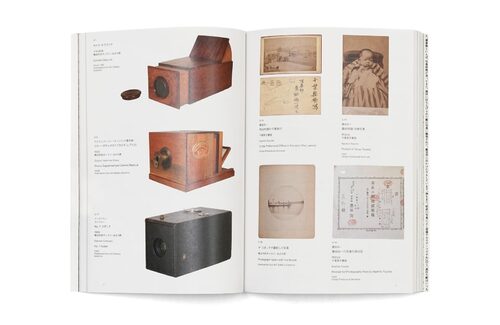
Photographic technology brought to Japan via the Netherlands at the end of the Edo period was an epoch-making innovation that realized the human desire to capture the scenes they see, and was rapidly adopted in the current of modernization during the Meiji era. At the same time, photography as a mode of artistic expression was crossing paths with a movement of realism in modern painters who were attempting to depict reality as it was, and it began searching out its own expression.
Shimizu describes and photographs landscapes (or views) that change through time, examining the acts of humans who try to retain the figure of how things once were, and recognizing the fact that painting and photography are both mediums that, if anything, deteriorate over time and become lost. Shimizu's technique of utilizing negatives that were damaged in seawater in works like Half Dreaming Glass (2022) or Surfacing (2024) is a way of marking the passage of time that is impossible to resist on real landscapes.
How will accumulations of past records be handed down to the future? The words and photographs of Shimizu, weaving back and forth between reality and fiction, establish a grand installation that connects the past and present, transcending gaps of time and space.
Chiba prefecture has a long history of cherishing its relationship with the Kingdom of the Netherlands, since the Sakura clan engaged in Dutch studies during the Edo period. This relationship was present during the Tokyo 2020 Olympic Games four years ago, when the prefecture hosted the Dutch Olympic team.
We hope that you enjoy the stories that Sarah van Rij & David van der Leeuw × Yuki Shimizu have created through photography. Perhaps they may lead to the creation of new stories within you, as an readers, that were not part of the artists' original intentions. We believe the artists are excited for that future too.
Sarah van Rij & David van der Leeuw
Sarah van Rij and David van der Leeuw are a Dutch photography duo based in Amsterdam and Paris. As partners in both life and work, they capture images evoking surrealist works through their meticulous approach to framing and composition.
They also undertake commissioned work for fashion brands and editorials.Their first photobook, Metropolitan Melancholia, was published by KOMINEK in 2023. The same year also saw the launch of Sarah van Rij's contribution to the Louis Vuitton Photobook Series: Fashion Eye Seoul. Her first solo museum exhibition is scheduled to open at the Maison Européenne de la Photographie in Paris in December 2025.
Yuki Shimizu
Born in Chiba, Yuki Shimizu graduated from the Department of Imaging Arts and Sciences at Musashino Art University in 2007. She won the Grand Prize at the 5th '1_WALL' Photography Competition in 2011 and the 18th Jun Miki Award in 2016. Her literary work won the Grand Prize at the 2018 R-18 Literary Award by Shinchosha.
Shimizu combines photography and text to create landscapes inspired by her research into local history and folklore. Her major publications include the novels Koko wa Yoru no Mizu no Hotori (Here at the Water's Edge at Night, Shinchosha, 2019) and Umi wa Chikasitsu ni Nemuru (The Sea in the Cellar, KADOKAWA, 2023), as well as the photobook Shore (AKAAKA, 2023). Exhibitions featuring this artist include 'Artists Related to Chiba: A Century of Glass Sea' (Chiba Citizen's Gallery Inage / Former Holiday House of Dembei Kamiya, 2021), 'Summer Vacation at a Certain Art Museum' (Chiba City Museum of Art, 2022), and 'MOT ANNUAL 2024 on the Imagined Terrain' (Museum of Contemporary Art Tokyo, 2024).
Editorial
Categoria
Informació
- Softcover, double-sided jacket
- 224 pages
- 182 x 257 mm
- ISBN 9784865412161
- Japanese, English
- Nov 2025