Publisher
Category
Information
- Hardcover
- 136 pages
- 228 x 300 mm
- ISBN 9784865412185
- Japanese
- Jan 2026
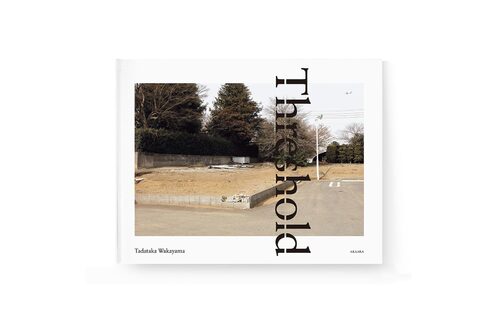
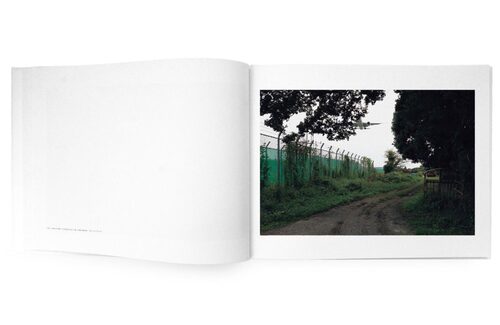
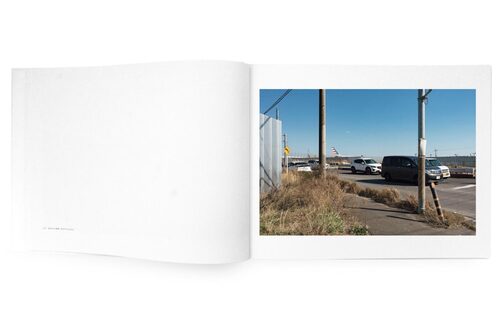
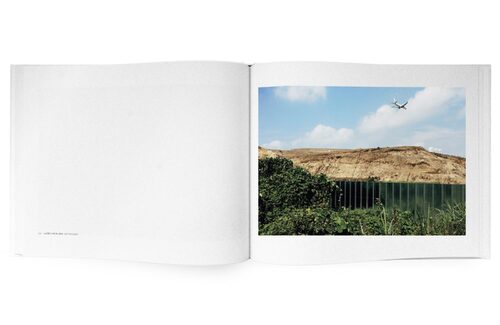
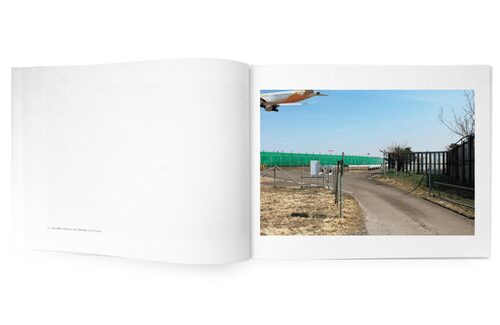
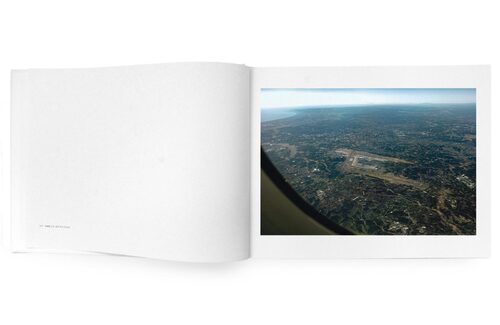
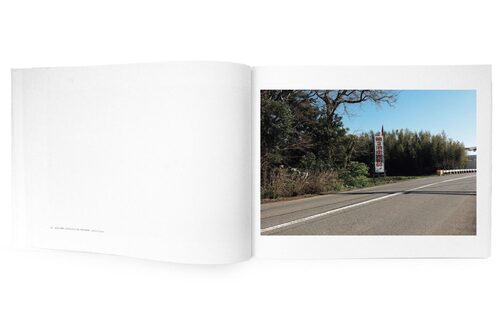
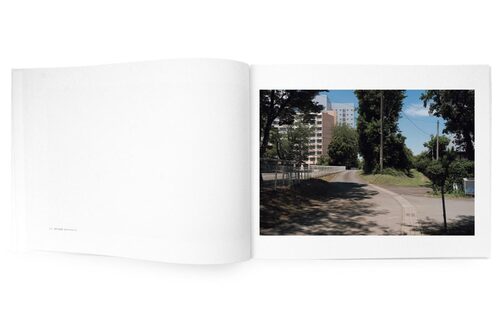
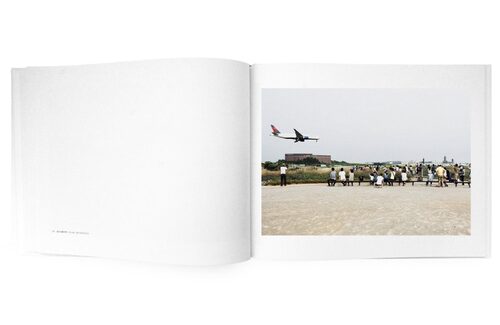
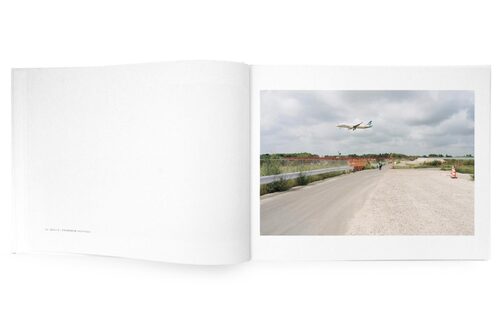
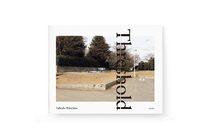

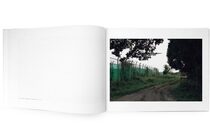
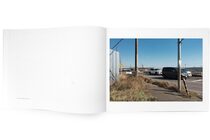

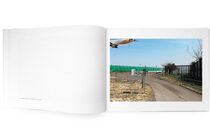

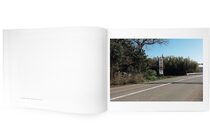
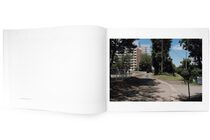
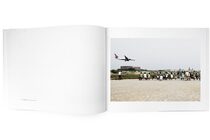
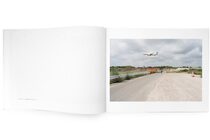
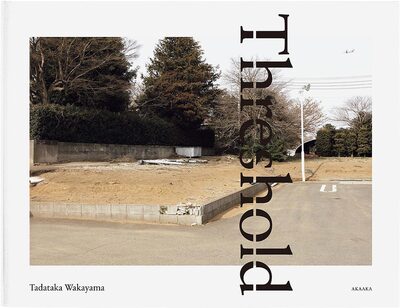
More than half a century has passed since its opening, and Narita Airport remains unfinished. What has become of it now? In 2013, when Wakayama happened to stop near the airport, he visited the Toho and Tenjinmine districts of Narita City, prompted by a simple curiosity about the present state of affairs. At that time, he had no knowledge of the circumstances surrounding the construction of the airport described above.
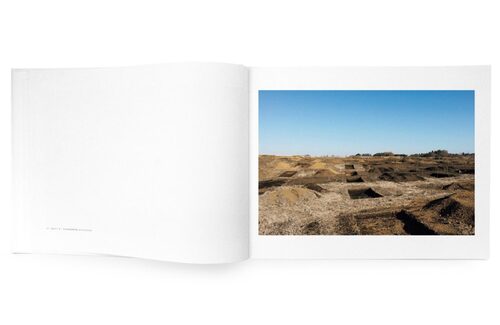
What he encountered was an intermingling of farmland and residential land with a distinctly suburban character–transformed from what must once have been a pastoral landscape. Of course, it is still possible to find, here and there, parcels of land belonging to residents who had lived in the area prior to the airport’s construction and who opposed its development.
Yet what had emerged, in a context separate from both the pre-airport landscape and the events surrounding the airport conflict, was the appearance of homogenized environments now ubiquitous throughout Japan.
The suburban condition Wakayama observed overlaps with what Edward Relph describes as “placelessness” in Place and Placelessness.
Relph defines placelessness as a sameness of appearance and atmosphere that weakens the identity of places to such an extent that they offer only bland, undifferentiated experiences. Despite the history of conflict over the airport’s construction, the omnipresence of such placeless spaces appeared to have eroded the existential value of the surrounding area, as past confrontations and memories seemed gradually to be buried within the homogenized landscape.
Looking up at the sky, one sees airplanes repeatedly taking off and landing.
Yet this alone does not endow the space with inherent meaning. What, then, constitutes the reality of the Narita Airport environs–so sharply at odds with images of nostalgic pastoral scenery or the violence of protest movements? Initially, Wakayama relied on his impressions of the site and decided to explore the area around the airport.
As he moved from place to place, he deliberately pointed his camera toward the airplanes taking off and landing as much as possible, imposing this constraint in order to restrain his own photographic preferences. Under these self-imposed rules, he repeatedly reconstructed past and present images of the Narita Airport environs, fragment by fragment.
Specifically, this involved taking locations that still evoke the struggles of the past, detaching them from their political and ideological contexts, mentally segmenting the images in his memory, and repositioning them in an attempt to give them a different spatiality.
Through the repetition of this photographic approach, Wakayama came to notice something.
The airport (the state) versus the rural village (community) were not the only subjects that shaped this place.
It has also been shaped by complex interventions of airport-related companies and individuals. In other words, beside the long-established friction between airport and village, there exists a “white space” that cannot simply be reduced to a “placeless” space derived solely from the interventions of diverse interests.
As he reviewed the vast number of photographs he had taken around the airport, his impression from preexisting photographs and videos he had seen gradually receded, and he began to gain a new understanding of the reality of this place that was distinctly different from conventional representations.
As mentioned above, the landscapes around Narita Airport had gone through several transitions even prior to the airport’s construction.
What he has been observing at the far end of this history is what he believes to be a “threshold” space that has become buried inside the changing consciousness of people.
A threshold denotes either the minimal measurable level or boundary at which one becomes aware of sensation or perception, or a buffer zone between private and public spaces. If we follow this definition, could the “threshold” be understood as a liminal space–with meaningful history and meaningless homogenization–lying between the public space of the airport and the personal space of privately owned land, or occupying the “gap” between places that evoke memories of struggle and those with a banal suburban character?
By reconstructing Wakayama’s own recognition and conceptions of the Narita Airport environs and, by extension, the appearance and character of the land itself, he expected that the inherent uncertainty of the place would become apparent.
That is to say, equating today’s Narita Airport area to a “threshold” seemed to involve the discovery of space that wavers within the complexity of social, regional, and personal relations, while continually questioning the tacit assumptions that underlie them. The airport and its surroundings emerge as an uncertain existence. These “thresholds” still exist today, testifying to the unresolved tensions that arose from events and uses of living spaces associated with the construction of the airport.
At present, Narita International Airport Corporation is undertaking the extension of Runway B and the construction of a third runway.
Publisher
Category
Information
- Hardcover
- 136 pages
- 228 x 300 mm
- ISBN 9784865412185
- Japanese
- Jan 2026