Publisher
Category
Information
- Softcover
- 104 pages
- 240 x 240 mm
- ISBN 9784865412277
- Japanese, English
- Apr 2026

Related Item

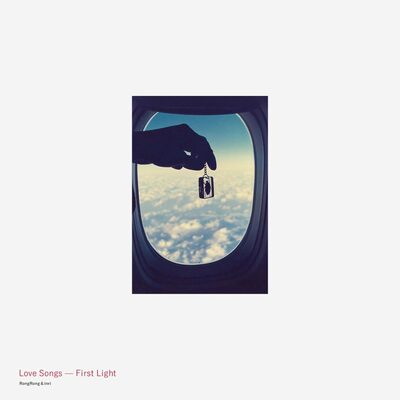
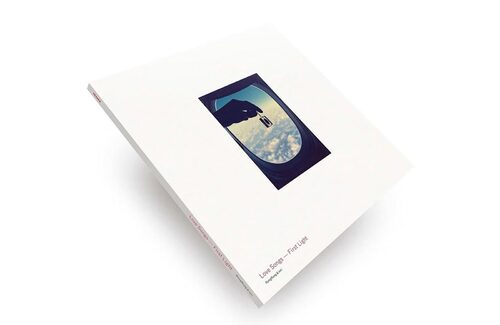
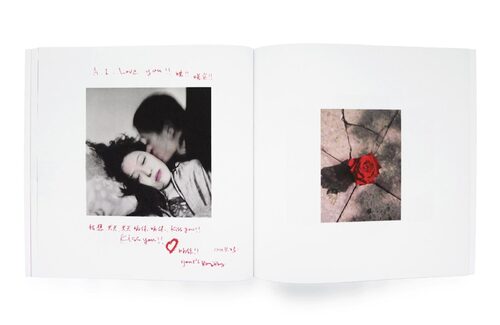
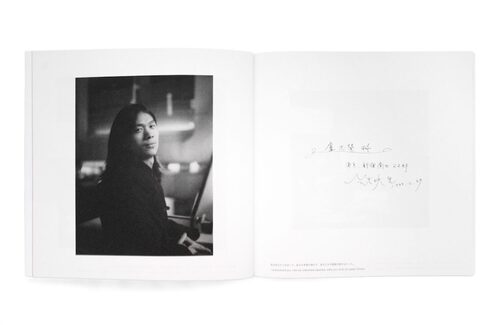
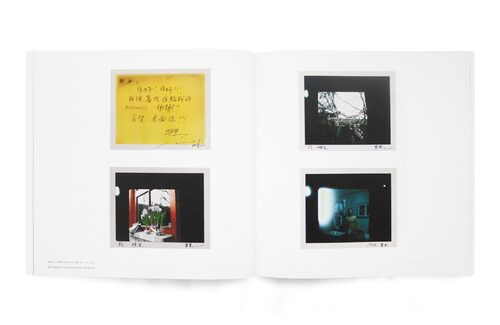
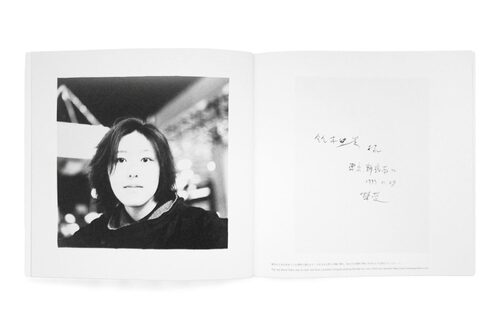
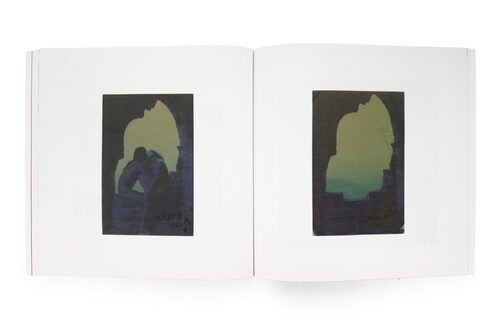
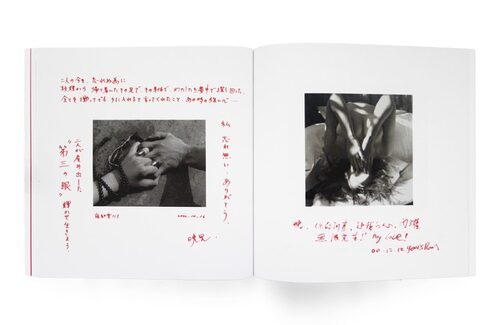
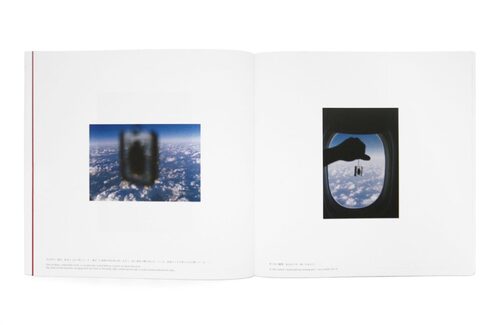
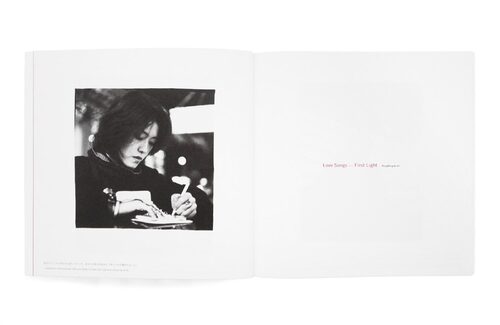
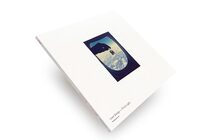
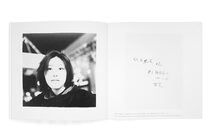
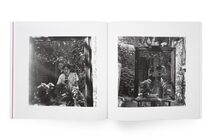
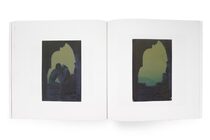
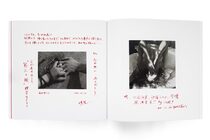
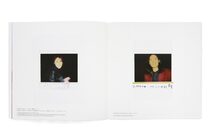
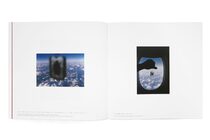
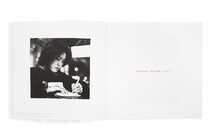
The photobook, ‘Love Songs — First Light’ , brings together the earliest “photographic letters” exchanged between the two artists from 1999 to 2000, selected from the larger “Personal Letters” series.
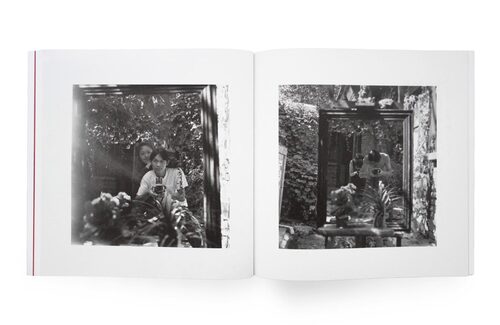
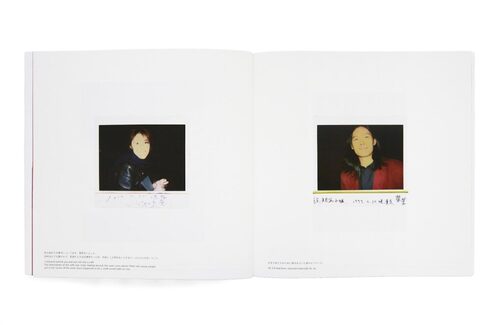
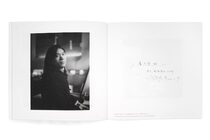
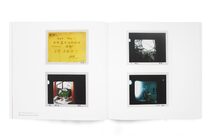
It consists of a number of hand-made, sometimes also hand-coloured, black-and-white photographic prints depicting either RongRong or inri, surrounded by messages in either/or both, Chinese characters and/or, English, from one to the other; as well as several images from the same time of the couple together.
‘Personal Letters’ was first shown at the MEP in 2022 as part of the collective exhibition Love Songs: Photography and Intimacy, more than 20 years after it was made.
The concept for the show was as follows: what if, rather than thinking about photography being an objective medium best suited to recording things, events, stories or indeed people, from an external or neutral perspective; what if we looked only at photographic works made within relationships, with all their radical subjective potential; that is to say made about, and with, love.
The story that accompanied their presentation is as follows: RongRong and inri first met in Japan in the year 1999, and fell in love, (they are still in love), but shared no common language. RongRong, who is Chinese, could not speak Japanese (although now he can, if only a little). inri, who is Japanese, could not speak Mandarin (although now she can). What is less easy to understand for non-Mandarin and Japanese speakers is the fact that although both languages are entirely different when spoken, they can be expressed, when written, in the same characters.
This fact of language meant that as they exchanged their first love letters, RongRong and inri could read and write what they couldn’t necessarily say, or speak as easily: a reversal of the convention that the spoken word is somehow more ‘direct’ than the written one.
Today RongRong&inri live and work as a single entity, which is to say, their love story had the happiest of ever-after endings both personally and professionally. But prior to their meeting and their first exchange of letters, and their decision to work only together, they followed individual creative paths.
RongRong was perhaps best-known for his work in what is known as the East Village, a community of artists working in Beijing in the early 1990s.
Inri as a young artist in the 1990s was also aware of the power of performance and the use of the body through a deep knowledge of the Japanese post-war avant-gardes.
Working together in RongRong’s hometown of Beijing, and then separately, while apart in China and Japan, RongRong&inri produced ‘Personal Letters’ in a way that spoke to both contexts: uniting elements of physical performance, emotive portraiture, and site-specific photography. The series is perhaps unique or at least incredibly unusual, therefore, in having been co-authored not only by both artists, but also by both subjects, working together (even when physically apart).
For although RongRong&inri kept this visual and textual correspondence private for so many years, ‘Personal Letters’ also marks a decision to make work together as a duo, and as such has to be understood as having been ‘art work’ in the fullest sense, with collaboration as core practice, at the same time as a necessary exercise in over-coming a barrier in private communication. And while the hand-written texts, with their declarations of love and hope,form a kind of sub-text or sur-text, (having been added to the images after their production), the visual content is also, itself, a series of statements about love, co-authored, together and apart, as an example of what RongRong&inri thought it possible to express through their new, shared, photographic language. In a strange, deeply prophetic way, ‘Personal Letters’, in both style and substance, inaugurates the time when there would no longer be RongRong and inri, but instead RongRong&inri.
Looking again at ‘Personal Letters’ for the moment of their publication, and in the knowledge of their incredible public reception during Love Songs, I am once again struck by their deeply unusual honesty and sincerity as the basis of their power. As a form of communication initially shared between lovers, they nevertheless have an uncanny ability to speak to viewers as declarations, not only of love, but of unity and shared purpose. Love is supposedly a ‘universal’ concept, which has run through literature, music and art for thousands of years. But is it significant that very often, in photography and elsewhere, it slips too easily into cliché and sentimentality. But the works in Love Songs, and none more so than RongRong&inri’s ‘Personal Letters’, forged thoughtfully and consciously in moments of separation and longing, as well as hope and joy, share truths that, while harder to understand, are so much deeper as a result.
Excerpt edited from a contribution by Simon Baker
“These private letters, first gathered in 2022 under the title Personal Letters, have now become a book.
We receive this with deep emotion.
Once again, our love for photography—and our sense of awe before it—has grown deeper.
Nearly two hundred years have passed since photography was born.
For a quarter of a century, we have been under its spell.
Most likely, we will remain with photography for the rest of our lives.“
Excerpt from the afterword by RongRong&inri
RongRong and inri began collaborating as the artist duo “RongRong&inri” in Beijing in 2000. Their works explore the relationship between humans and nature through the use of their own bodies as artistic mediums, while also portraying the social realities of China through scenes from everyday life.
Their major works include In Fujisan, Japan, 2001, Liulitun, Beijing (1996–2003), and Tsumari Story (2012–2014).
In 2007, they founded the Three Shadows Photography Art Centre in Beijing’s Caochangdi Art District. Since 2009, they have organized the “Three Shadows Photography Award (TSPA)” to support and discover emerging photographers in China. In 2015, they launched the Jimei × Arles International Photo Festival in official partnership with Rencontres d’Arles.
Their major exhibitions include:
Love Songs at Maison Européenne de la Photographie (2022) and International Center of Photography (2023)
Trace: The Photographic Journey of RongRong&inri at Chengdu Contemporary Image Museum (2021)
Jifei Kyoto at KYOTOGRAPHIE International Photography Festival (2021)
All You Need Is LOVE: From Chagall to Kusama and Hatsune Miku at Mori Art Museum (2013)
The Aesthetics of Photography – Five Elements at Tokyo Metropolitan Museum of Photography (2013)
Echigo-Tsumari Art Triennale (2012)
In recent years, their works have been exhibited and collected by major institutions worldwide, including M+, Haus der Kunst, Tate Modern, Hirshhorn Museum, Maison Européenne de la Photographie, International Center of Photography, and High Museum of Art.
In 2022, RongRong&inri received the Photography Society of Japan Awards – International Award. They are currently based in Kyoto.
Publisher
Category
Information
- Softcover
- 104 pages
- 240 x 240 mm
- ISBN 9784865412277
- Japanese, English
- Apr 2026