Publisher
Category
Information
- Hardcover
- 144 pages
- 185 x 258 mm
- ISBN 9784865412321
- English
- Jun 2026

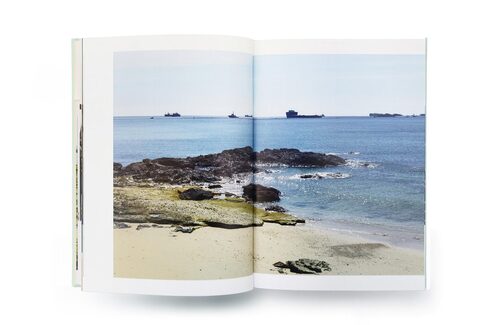
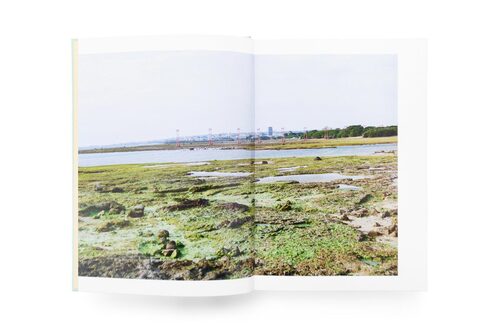
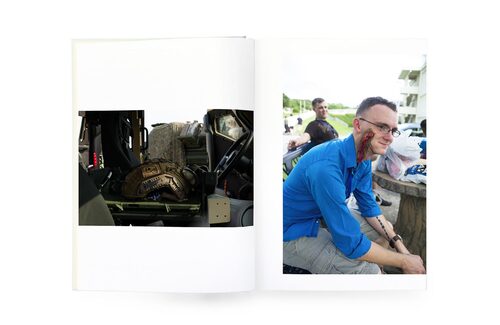
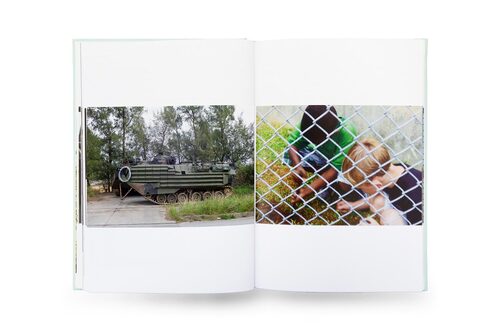
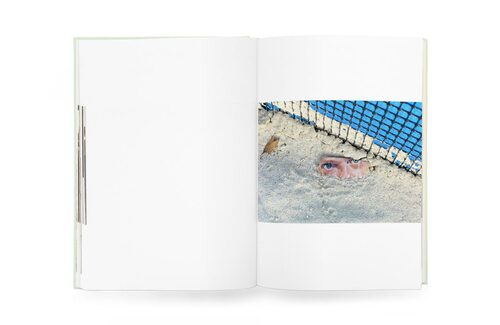
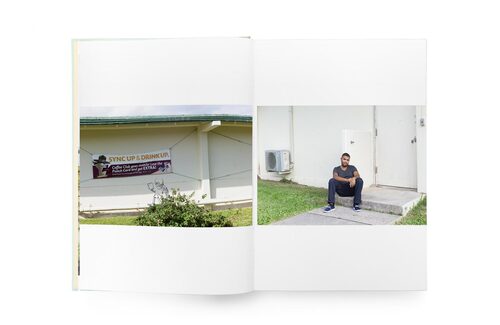
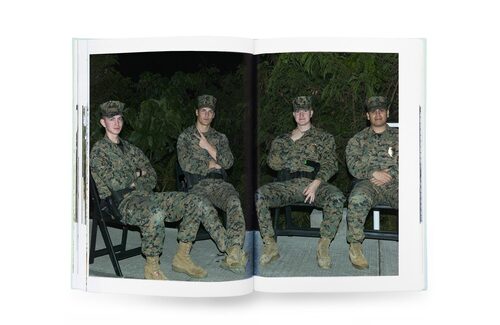
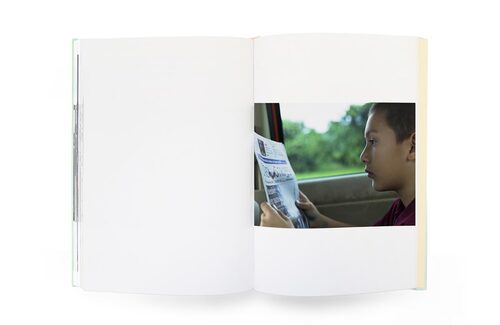
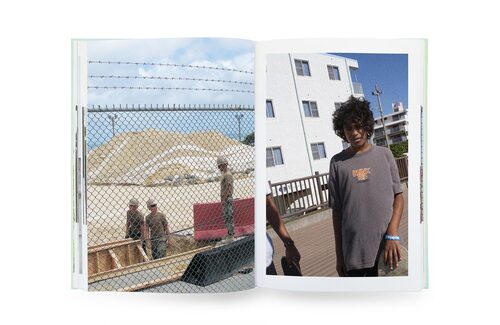



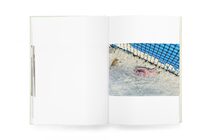

There is a photograph showing tattoos of a shisa and a skull. I took it outside, laid it on the concrete, and filmed it on video.
An ant walks across the photograph as light shifts around it. Even when filmed on video, what is captured in the photograph does not move; only time passes. It seemed to overlap with Okinawa.
In Okinawa too, all kinds of things are constantly happening. It took a long time for this photobook to be published because as I continued photographing, I kept making excuses for my indecision about where I should draw a line and bring everything together. I place myself within an Okinawan history I did not experience. I was in an environment that allowed me to move back and forth between Okinawa and the world of the military bases, but it was always something I wanted to avoid facing and speaking about.
But no matter how much I explored the question of what to do with what I had personally seen and experienced in everyday life, ultimately, all I could do was continue thinking about it while photographing.
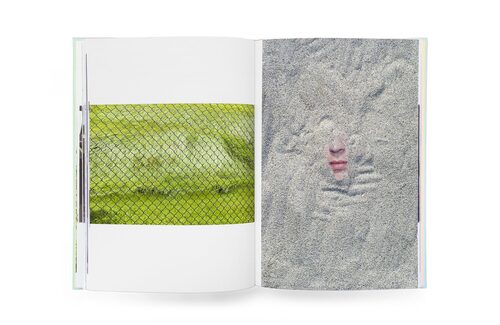
One of the things that originally led me to photography was my interest in movie poster design. I was searching for an approach to photographing Okinawa at a time when I couldn’t bring myself to photograph people, and it was then that I began working on a series called Sleep in Contradiction, in which I tore images of people from music magazines purchased on the bases and buried the fragments in the sand.
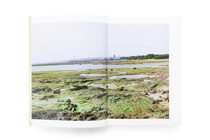
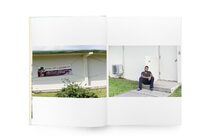
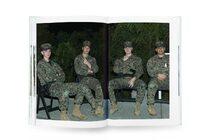
Forced construction at sea, mountains cut away, opposing voices pushed aside— standing there, wondering in what way I could become involved and how I could continue that involvement, I gradually began photographing the bases and people more frequently. This process led to the series Design of Okinawa, which can be understood in two senses—’Okinawa as something designed’ and ‘designs that emerge from Okinawa.’ By ‘design,’ I mean not only form and color but also background, relationships, and contradictions.
I felt that both photographing things I positioned and composed and photographing what I saw standing at actual sites were both necessary for me. I wanted to do something in complete opposition to war.
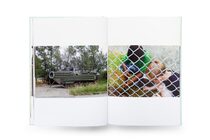
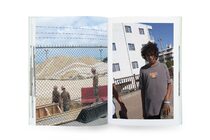
Although I was photographing the reality I was seeing, a photograph taken through a hole in a fence might appear as though it had been taken from inside a base, or the sea seen from a base could seem like a view from outside the base. I don’t know how each person is going to understand scenes that can be viewed with these kinds of reversals in perspective, but somewhere within myself there was something like resolve to accept that as well.
What I saw at sites in Okinawa overlaps with what is happening in many different places. It is not limited to the U.S. military bases. The military buildup of Japan Self-Defense Force bases under what is called the ‘southwestern shift’ on Ishigaki Island, Miyako Island, Yonaguni Island, and Okinawa Island has deepened conflict and division, and those in power are casting aside important things.
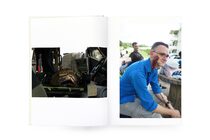
Perhaps the people in these photographs also left Okinawa and went off to war.
People who lived—and people who had wished to live—without being divided by boundaries or distinctions between inside and outside. Okinawa is set against a backdrop layered with memories of war that form a line very different from boundary lines. On that line appears an Okinawa that turns its back on war.
It is this line, free from boundaries, that I want to make the axis of my work.
Publisher
Category
Information
- Hardcover
- 144 pages
- 185 x 258 mm
- ISBN 9784865412321
- English
- Jun 2026